
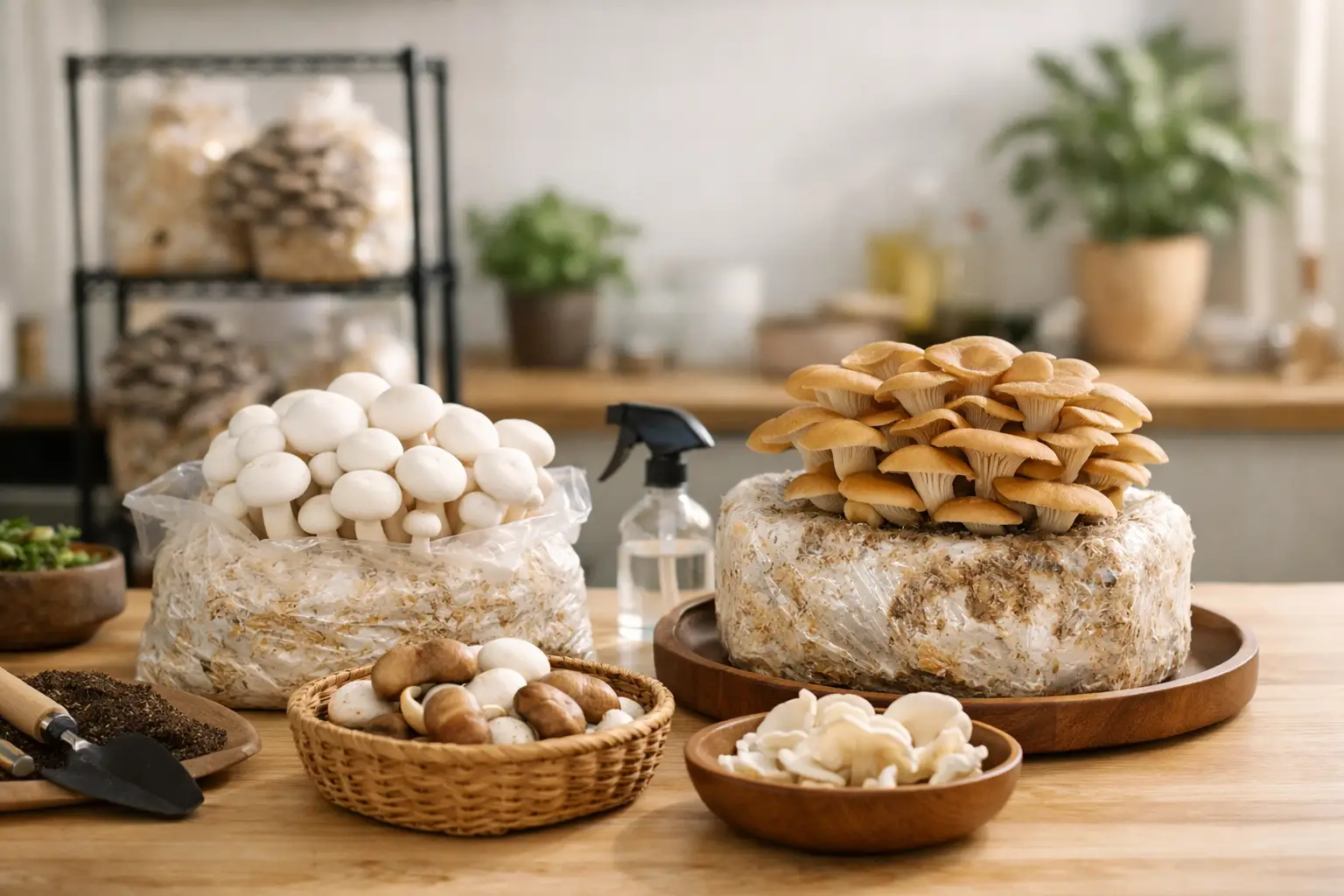
How to Grow Mushrooms at Home
If you want to learn how to grow mushrooms at home without wasting weeks on contaminated tubs, weak genetics, or bad humidity, start by getting one thing straight – mushrooms reward clean technique, patience, and a setup that matches your skill level. The fastest path is not always the cheapest, and the cheapest path is rarely the easiest.
For most home growers, the real decision is not whether mushroom cultivation is possible. It is whether you want a low-friction grow with a kit, a more hands-on run from spores, or a full DIY setup that gives you more control but also more room for error. That trade-off matters because mushroom growing can be simple, but it is never random.
How to grow mushrooms at home without overcomplicating it
The biggest mistake beginners make is trying to copy advanced growers before they understand the basics. If your goal is reliable results at home, keep the process tight. You need viable genetics, a clean growing medium, the right moisture level, fresh air, and steady temperatures. Miss one of those and the whole run can stall.
A grow kit is the easiest entry point because most of the sterile work is already done. You are usually managing humidity, airflow, light exposure, and harvest timing rather than building everything from scratch. If you are growing from spores or liquid culture, you take on more work up front, but you also get more flexibility on strain choice, substrate volume, and future scaling.
That is why buyers who care about convenience often start with a ready-to-use format and then move into spores, grain, and bulk substrate once they know what healthy growth looks like. It is the same logic as shopping any category – fast setup first, customization later.
Pick the right mushroom type for your setup
Not every mushroom behaves the same way indoors. Oyster mushrooms are often the easiest for beginners because they grow aggressively and forgive small mistakes. Shiitake can be done at home, but they usually require more patience. If you are working with psilocybin mushroom genetics where legally permitted, understand that environmental control becomes even more important because contamination can wipe out progress fast.
This is where expectations matter. Some species fruit quickly and heavily. Others need tighter temperature ranges or different substrates. Before you buy anything, decide whether you want speed, simplicity, or higher involvement. You can usually get two, but not all three.
Your growing method changes everything
There are three common ways to handle a home grow. A kit gives you convenience. Inoculated grain or all-in-one bags give you a middle ground. A full monotub or bulk setup gives you the most yield potential, but it demands better sterile technique.
If you live in a small apartment, a compact bag or kit may beat a larger tub simply because it is easier to monitor. If you want repeatable harvests and you are comfortable learning process details, tubs and bulk substrate make more sense. Home cultivation is not just about what can grow. It is about what you can manage consistently.
What you need to grow mushrooms at home
You do not need a lab, but you do need order. At minimum, most home growers need spores or culture, substrate, a clean container or bag, a spray bottle, gloves, and a space with stable temperatures. Depending on the method, you may also need grain spawn, a monotub, liners, rubbing alcohol, and a small light source.
Humidity is a big deal, but beginners often misunderstand it. More moisture is not always better. Mushrooms want a humid environment, not standing water or soaked surfaces. Too wet and you invite bacteria. Too dry and pins can abort before they develop.
Temperature matters too, but less dramatically than some people think. Most indoor grows do best in a moderate, stable range rather than constant adjustments. Chasing tiny fluctuations usually creates more problems than it solves.
Substrate and spawn basics
Substrate is the food source your mushrooms grow from. Spawn is the colonized material that transfers mushroom mycelium into that food source. In plain terms, spawn starts the run and substrate carries it forward.
Different species prefer different materials. Oyster mushrooms often do well on straw, sawdust, or supplemented blocks. Many home growers use coco coir-based mixes for indoor fruiting because they are widely available and easier to handle. The right choice depends on your species and how much effort you want to invest in preparation.
If you are buying premade supplies, convenience is the upside. If you are preparing your own substrate, cost savings can be real, but so is the contamination risk. Sterility and pasteurization are not optional details. They are the difference between growth and failure.
The step-by-step home growing process
Once you have your materials, the actual workflow is pretty straightforward. First, inoculate the sterile grain or grow medium with spores or culture if your setup requires it. Then let the mycelium colonize fully in a clean, stable environment. After that, move it into fruiting conditions by balancing humidity, fresh air exchange, and indirect light.
Colonization is the phase where patience pays off. A lot of first-time growers disturb the container too often, crack it open early, or start misting before the mycelium is established. That usually slows things down. During this stage, consistency beats intervention.
When the surface is fully colonized, fruiting conditions matter more. This is where you watch for tiny pin formations and maintain surface moisture without drenching the substrate. Good airflow helps prevent stale conditions, but too much direct air can dry things out. This is one of those it-depends moments where your room, climate, and container style all affect the right balance.
Lighting, airflow, and humidity
Mushrooms do not need intense light like plants. They use light more as a signal than an energy source. A simple ambient light cycle or indirect daylight is usually enough. Blasting them with strong grow lights is unnecessary for most home setups.
Airflow is more important than many people expect. Stale air can cause long stems, weak caps, or poor fruiting. But aggressive fanning and dry room air can create the opposite problem. The goal is steady fresh air, not constant disturbance.
Humidity should stay high during fruiting, especially when pins begin to form. Fine misting can help if your surfaces are drying out, but over-misting can bruise or stress delicate growth. Learn what healthy surface conditions look like and you will make better decisions than if you follow a spray schedule blindly.
Common mistakes that ruin a grow
Contamination is the biggest one. If your tools, hands, injection ports, or containers are not clean, molds and bacteria can take over before your mycelium has a chance. This is why shortcut culture burns beginners. Saving a few dollars on proper prep often costs the whole harvest.
The second mistake is opening containers too often. People want to check progress every few hours, but every unnecessary interaction increases contamination risk and disrupts the microclimate. Let the grow work.
The third is misreading moisture. Dry cakes stall. Soaked substrates rot. If there is one skill that separates weak results from solid flushes, it is learning how moisture should look at each stage.
When to harvest
Harvest timing depends on species, but generally you want to pick mushrooms when caps are well formed and before they begin dropping heavy spores or degrading in texture. Waiting too long can reduce quality. Harvesting too early can cut yield.
Use clean hands or sanitized tools and remove the fruits carefully to avoid damaging nearby pins. After the first flush, many setups can produce additional rounds if moisture and conditions stay in range. Later flushes are often smaller, but they can still be worth the effort.
Is it better to use a kit or build your own setup?
If your priority is speed, simplicity, and a lower learning curve, use a kit. If your priority is yield, strain selection, and repeatable control, build your own. Neither option is automatically better. The right choice depends on how much time you want to spend troubleshooting.
A lot of buyers want discreet, home-based cultivation without turning their space into a project. That is exactly why ready-to-go formats, spores, and cultivation supplies are such a strong category for ecommerce. They remove friction. If you want to shop cultivation products, spores, mushroom formats, and adjacent categories in one place, Trippy Store Us leans hard into that convenience-first model.
The smart move is to match your setup to your real habits, not your ideal ones. If you know you want a fast, manageable grow, keep it simple. If you know you are the type to optimize every variable, build out a more advanced system and accept the extra work.
Home mushroom cultivation is worth it when you treat it like a process, not a hack. Start clean, keep conditions steady, and let the grow teach you what your environment is actually doing.

Add a review
Your email address will not be published. Required fields are marked *